In This Guide
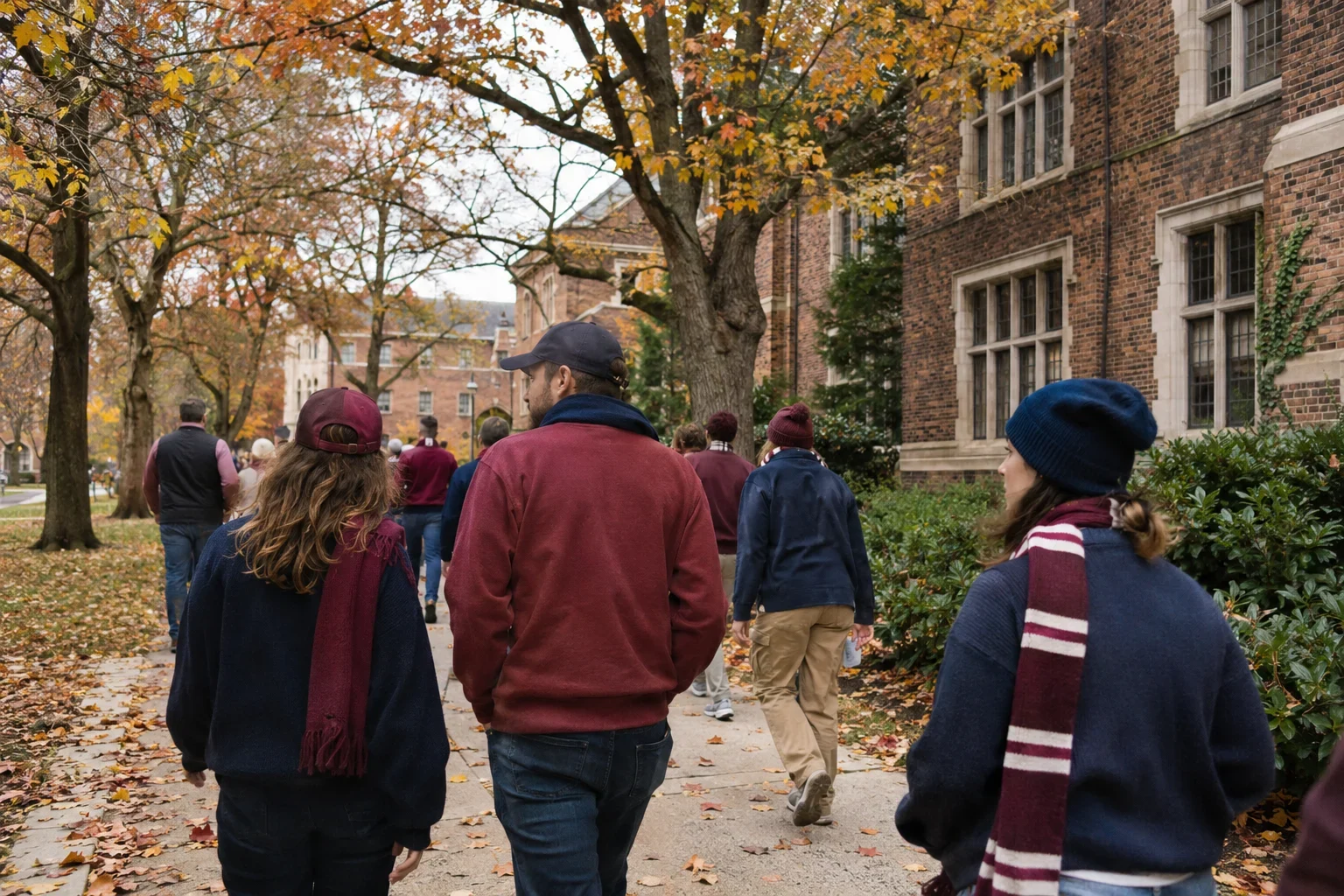
Plan a college football weekend by connecting four places: where you sleep, where you spend time on campus, where you tailgate and where you enter the stadium. Choose accommodation only after checking that complete route, then build a schedule that remains workable with an earlier or later kickoff.
The most useful itinerary combines confirmed arrangements with movable activities. Know which reservations you can change, what access your tickets and parking arrangements provide, and how everyone will return after the game. Give campus exploration, meals and social plans flexible places in the weekend so that one schedule change does not force you to rebuild the whole trip.
Choose the game and keep the travel window flexible
Start with the destination, game date and the people traveling. Record whether kickoff is confirmed or still an assumption, and keep that distinction visible in your shared itinerary. Avoid attaching meals, transport reservations or departure plans to an unconfirmed time.
Before committing money, sketch two versions of the trip. With an earlier kickoff, would you need to arrive the previous day to fit in your priorities? With a later kickoff, would your intended departure still allow enough time to leave the stadium, reach your transport and collect any belongings?
Compare the terms behind the reservation
For each accommodation or transport booking, check the cancellation deadline, change conditions, payment schedule and any minimum stay. Ask whether changing the arrival date affects the whole booking. Keep the actual terms alongside the confirmation rather than relying on a short booking-page label.
A useful decision question is: Which commitment becomes difficult to change first? Let that deadline guide when you review the remaining uncertainties. If your travel window cannot move, decide in advance which optional activity you would drop to protect the journey home.
Map the weekend around campus geography
Place your accommodation, intended tailgate, parking or transport stop, and stadium entrance on one route plan. Add any campus activity you particularly want to attend. A listing’s distance to campus does not establish the journey to your destination within it.
Trace the actual connections between those points. Verify which pedestrian approaches are usable for the selected game, where crossings are available and whether any restrictions affect the route. If a shuttle is part of your plan, confirm its boarding point, destination and operating arrangements before counting it as a connection.
Which location works for everyone?
Ask each traveler about comfortable walking distances and any access needs. Then check the relevant route details, including steps, gradients, rest opportunities and accessible connections. Do not assume these features from a map or from a property’s description of being nearby.
Compare accommodation using the whole sequence: leave the room, reach the tailgate, enter the stadium and return afterward. A shorter first leg is less useful if another leg requires an unsuitable transfer. Keep an alternative route available if your preferred connection depends on arrangements that have not yet been confirmed.
Compare accommodation by total weekend cost
Compare the cost of the complete stay, rather than the displayed nightly rate. Include required nights, taxes, mandatory fees and any transport or parking you expect to purchase. If one option requires another night to make the journey practical, include that night before calling it cheaper.
Use the same dates, group size and cancellation needs for every comparison. Record which costs are confirmed and which remain estimates.
| Accommodation area | What to investigate | Question that decides its value |
|---|---|---|
| Near campus | Exact route to the tailgate and stadium entrance, property access and parking terms | Does the location simplify the journeys our group will actually make? |
| Elsewhere in town | Available transport, pickup arrangements and the return journey | Does the saving cover the connections we need? |
| A neighboring community | Travel arrangements in both directions and any additional overnight requirement | Is the full trip still affordable and practical after the game? |
Historical rental-demand reporting can help frame your research, but it cannot establish the price or availability of a current stay. Use it as a reason to compare your selected dates carefully, rather than as a forecast of what you will pay.
Does the cheaper room remain cheaper?
Calculate a group total and then divide it using your agreed sharing arrangement. Check that everyone is comparing equivalent sleeping arrangements and acceptable booking terms. A lower price only helps if the accommodation and its transport plan work for the people using them.
Build an itinerary that moves with kickoff
Arrange the weekend in blocks: arrival, campus exploration, a meal, tailgating, stadium entry and the return journey. Give each block a priority and identify what it depends on. An activity with a confirmed admission time needs different treatment from an informal walk that your group can move.
If the campus program includes Football Friday, consider placing activities you want to attend in the arrival-day block. Check the selected weekend’s schedule and access requirements before committing to a particular event.
| Weekend block | Earlier-kickoff version | Later-kickoff version |
|---|---|---|
| Campus exploration | Move it to arrival day or the following morning | Consider it before the pregame gathering if the route works |
| Main meal | Choose a slot that protects the approach to the stadium | Arrange it around the activities you have confirmed |
| Tailgating | Shorten or simplify the gathering | Set a clear departure point for stadium entry |
| Departure | Allow for the full journey back to your transport | Check whether another night makes the return practical |
Work backward from the entry arrangements for your actual ticket. Allow for the journey from the tailgate, required procedures and your group’s walking pace without inventing a universal arrival buffer.
Keep optional activities easy to remove. If the schedule becomes tight, dropping one stop is more useful than trying to preserve every item while rushing between them.
Plan the approach to campus and the postgame exit
Before departure, check the selected game’s road restrictions and the access instructions for your accommodation, parking area and transport connections. Trace the permitted approach to each destination. Do not assume that a route used on another day will remain available for the game.
If you intend to park, verify that your reservation or other arrangement covers the intended location and date. Check the arrival instructions and how you will reach campus from there. If you intend to use a shuttle, establish whether it operates for your game, what access it requires and where the return journey begins.
Build the return plan before choosing the outbound ride
Identify the postgame pickup or boarding location and confirm that your group can reach it. Check any service cutoff, reservation requirement or restrictions that affect the return. Avoid making the plan depend entirely on an assumed game finish.
Choose a fallback with real arrangements behind it. That might mean a second confirmed transport option, an alternative permitted driving route or a revised overnight plan. If none is workable, resolve the return journey before committing to the outbound choice. Share the instructions with every traveler so that one person’s unavailable phone does not remove the group’s only copy.
Choose a tailgate plan and check its permissions
Decide whether you are hosting a tailgate or joining someone else’s gathering. That choice determines which questions you need to answer before buying supplies or arranging transport.
If you are hosting, confirm permission to use the exact location and establish what access is required. Ask about permitted equipment, food preparation, alcohol, vehicle access, weather procedures and cleanup obligations. Verify any relevant arrival or departure conditions before planning a setup that depends on them.
If you are joining, obtain the host’s location and meeting instructions. Ask whether guests need a ticket, pass, invitation or other arrangement, and agree on what you should bring. Do not assume that an invitation includes parking, seating, food or drinks.
Connect the gathering to stadium entry
Decide how equipment and other belongings will be stored or removed before the group heads to the stadium. Check whether anything you bring would create a problem under the venue’s entry rules.
Set a weather alternative that everyone understands. Confirm whether the host will relocate, cancel or use another arrangement, and check access to any proposed alternative. Buy supplies only after the location, permissions and practical responsibilities are clear.
Prepare for the correct stadium entrance
Read the access instructions for your actual ticket and identify the entrance you are expected to use. If your plans include hospitality or another separately controlled area, check how that access connects with your stadium entry. Do not assume that every ticket or package uses the same approach.
Review the selected venue’s current bag rules, prohibited items and entry procedures. Make a belongings plan before leaving the accommodation: what you need, what you can bring and where anything else will remain. A storage option should be confirmed before you rely on it.
Make access usable for each traveler
Check how tickets must be presented and whether each person needs their own access method. Ask whether the required process uses an app, a live barcode or another format; do not assume a screenshot will be accepted. Complete any required setup before heading toward the stadium.
Verify payment options for purchases you expect to make. If someone needs an accessible entrance or other assistance, confirm the arrangements and the route to the relevant access point.
Finally, put the correct entrance into the shared itinerary. The stadium’s general location is useful for orientation, but your arrival plan should end at the entrance your group can actually use.
Catch planning mistakes before departure
Review the itinerary by testing its connections. Does the accommodation route reach the intended tailgate? Does the tailgate plan leave time for the correct stadium entrance? Does the return transport remain workable under your later-finish scenario?
Use these questions for a final group check:
- Is kickoff confirmed, and which bookings need review if it changes?
- Have we included every required night, fee and transport cost in the lodging comparison?
- Are parking, tailgate access and stadium admission each arranged where needed?
- Can everyone manage the planned routes, with any necessary assistance confirmed?
- Where will we meet if separated, and is that location accessible to everyone?
- What changes if weather disrupts an outdoor activity or the preferred return connection is unavailable?
Keep one shared itinerary with reservation details, entrance instructions, meeting arrangements and the return plan. Assign someone to check updated game and travel information before the group leaves.
Your next step is to choose the game and compare accommodation using the complete route. Once those connections work, fill the flexible blocks with the campus activities and gatherings your group most wants to enjoy.